Why 5-Inch Shorts Chafe on Humid Days and Not on Hot Ones
Quick Answer: Humidity causes chafing because sweat cannot evaporate, so fabric stays wet, salt crystals build up on the skin, and wet fabric has a far higher friction coefficient than dry fabric. A dry 30C day and a humid 30C day are completely different conditions for your skin. The fixes are a longer or more compressive liner, an anti-chafe balm applied before you start rather than after it hurts, and getting out of wet shorts immediately afterwards.
You wore the same shorts on Tuesday and Saturday. Same route, same temperature reading, same everything.
Saturday was 78 percent humidity, and that is the entire explanation.
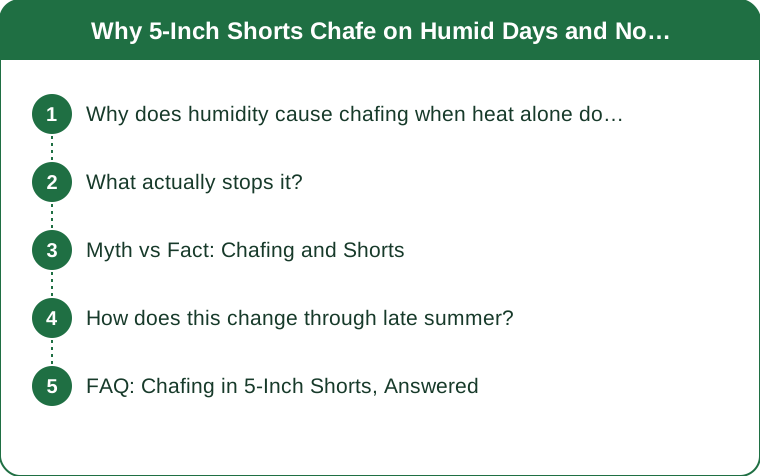
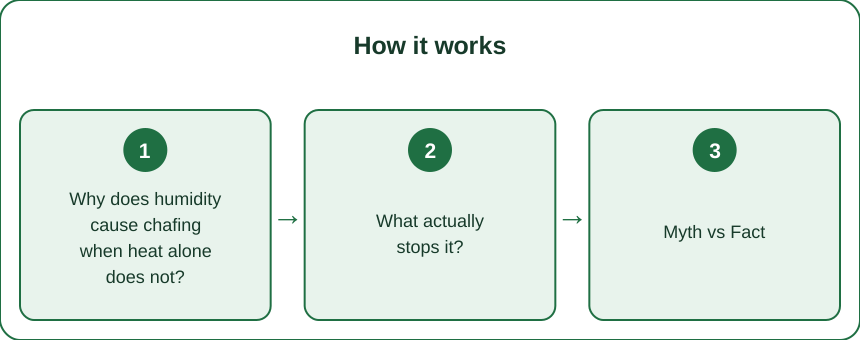
Why does humidity cause chafing when heat alone does not?
Sweat that cannot evaporate stays on the skin. Evaporation is how sweat cools you, and it requires a humidity gradient. In humid air the sweat simply sits there, keeping both skin and fabric permanently wet.
Wet fabric has substantially higher friction than dry fabric. This is the core mechanism. The same shorts that glide when dry drag when saturated, and thousands of repetitions of that drag is what produces the damage.
Salt crystals form as sweat partially dries. They are abrasive, they sit at exactly the contact points, and they are why chafing frequently gets worse in the last third of a session rather than the first.
Skin softens when wet, which makes it more vulnerable. Prolonged moisture reduces skin resilience, so the same friction load does more damage on a humid day than on a dry one.
Swelling adds contact area. Heat and humidity cause mild peripheral swelling, which increases the area of thigh-to-thigh or thigh-to-fabric contact compared to a cool day.
And you are slower in humidity, so the exposure lasts longer. A given distance simply takes more time in humid conditions, which means more repetitions of the same friction.
What actually stops it?
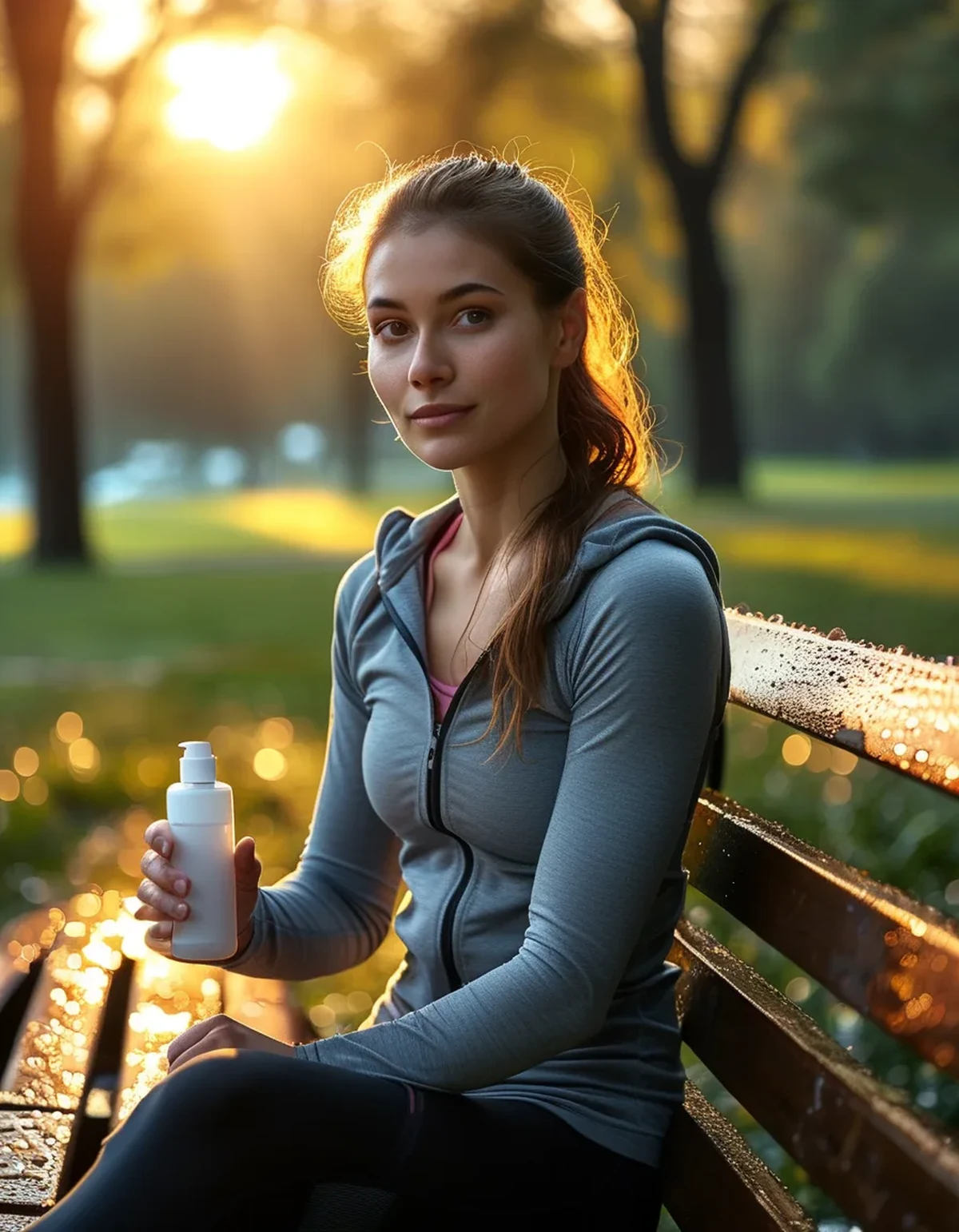
Apply an anti-chafe balm before you start, not when it hurts. By the time you feel it, the skin is already damaged. Pre-application is the single most effective intervention available and it takes ten seconds.
Balm over powder in humid conditions. Powders absorb moisture and then clump, which in high humidity produces an abrasive paste. Balms and creams stay put and keep working when wet.
Check the liner, not the shorts. Most 5-inch short chafing is a liner problem. A liner that rides up exposes thigh-to-thigh contact, which is where the majority of the damage occurs.
Compressive liners beat loose ones for this specific problem. A liner that stays in place prevents skin-on-skin contact entirely, which is a better solution than reducing friction between skin and fabric.
Flat seams matter more in humidity than in dry heat. A raised seam that is unnoticeable when dry becomes a pressure line when wet, and this is where most of the non-thigh chafing comes from.
And change immediately afterwards. Sitting in wet shorts after a session extends the exposure by however long you take to shower, and that period is when a mild irritation becomes a genuine sore.
Myth vs Fact: Chafing and Shorts
Myth: Chafing is a sign the shorts are too small. Fact: it is far more often a liner that rides up or fabric that stays wet. A larger size with the same liner behaviour chafes identically.
Myth: Longer shorts always solve it. Fact: longer helps with thigh-to-thigh contact but introduces a new contact line at the hem. The liner length and its grip matter more than the outer short length.
Myth: Powder is the traditional answer. Fact: in high humidity powder clumps into an abrasive paste. It works in dry heat and works against you in humid conditions.
Myth: You should toughen up and it will stop. Fact: skin does adapt somewhat to repeated friction, but not to being wet for two hours. Managing moisture is the actual intervention.
Myth: Cotton is gentler on skin. Fact: cotton holds far more moisture and stays wet far longer, which makes it considerably worse in exactly these conditions despite feeling softer dry.
Myth: It only happens to certain body types. Fact: thigh chafing is more common for some, but seam and waistband chafing in humid conditions is close to universal at longer durations.
How does this change through late summer?
Late August often brings the most humid conditions of the year. Warm air holds more moisture, and the end-of-summer pattern in many regions produces high dew points even as air temperature starts to ease.
Cooler air can still be very humid, which catches people out. A 22C morning at 90 percent humidity chafes more readily than a 30C dry afternoon, and nobody applies balm for a mild morning.
Rain adds a completely separate problem. Wet fabric from rain behaves like wet fabric from sweat, plus grit. Post-rain runs are a high-chafe condition regardless of temperature.
Longer sessions return as the heat eases. People extend distances in early autumn, and duration is the multiplier on every mechanism described above.
Layering reintroduces waistband friction. Adding a top layer that sits over the waistband creates a new contact line that did not exist in summer.
And the transition to tights is not automatic relief. Full-length tights eliminate thigh contact but add ankle and waistband contact points, so the problem tends to move rather than disappear.
FAQ: Chafing in 5-Inch Shorts, Answered
Why do my shorts chafe on humid days but not hot ones?
In humid air sweat cannot evaporate, so skin and fabric stay wet. Wet fabric has substantially higher friction than dry fabric, and prolonged moisture softens skin so the same friction does more damage.
What is the best way to prevent thigh chafing?
A compressive liner that stays in place, plus an anti-chafe balm applied before you start. Prevention is far more effective than anything applied after you feel it.
Is powder or balm better?
Balm in humid conditions. Powder absorbs moisture and clumps into an abrasive paste when saturated, which makes it counterproductive exactly when you need it most.
Do longer shorts stop chafing?
They help with thigh-to-thigh contact but create a new contact line at the hem. Liner length and grip matter more than the length of the outer short.
What should I do after a humid session?
Change out of wet shorts immediately. The period between finishing and showering is when mild irritation frequently becomes a genuine sore.
TL;DR:
- Humidity, not heat, is what causes chafing - sweat cannot evaporate, fabric stays wet, and wet fabric has far higher friction.
- Salt crystals and softened skin are why the last third of a session is always the worst part.
- Apply anti-chafe balm before you start; by the time you feel it, the damage is done.
- Use balm rather than powder in humid conditions - powder clumps into an abrasive paste.
- Most 5-inch short chafing is a liner problem; a compressive liner that stays put beats a longer outer short.
- Change out of wet shorts immediately afterwards.
Keep Reading
This article is for general informational and styling purposes only. Fit, sizing, and product availability may vary.