Five-Inch Shorts in the First Cool Week - What Still Works
Quick Answer: Five-inch shorts stay comfortable down to around 10C when you are moving, provided you cover the extremities rather than the legs - a long-sleeve top, a higher sock, and something on the hands for the first ten minutes. Below that, add a light legging underneath rather than switching garments entirely. The mistake is putting the shorts away at the first cool morning, when the mid-afternoon is still shorts weather for another month.
Tuesday was 26C. Thursday morning is 13C, and the instinct is to move the shorts to the back of the drawer for eight months. That instinct is about four weeks early and it costs you the most comfortable running and walking weather of the entire year.

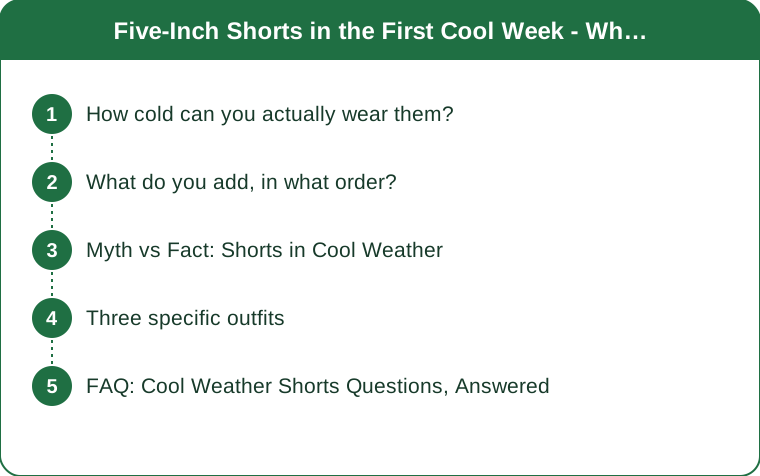
How cold can you actually wear them?
Colder than most people assume, because moving legs generate a lot of heat.
Above 15C: no changes at all. This is still straightforwardly shorts weather while moving, and a large portion of September afternoons will be here.
10 to 15C: cover the extremities. A long-sleeve top and a higher sock, and legs stay bare. The legs are the largest working muscle group in the body and they produce serious heat once you are moving - within about ten minutes of starting, bare legs at 12C are genuinely comfortable. The discomfort is in the first ten minutes, and the first ten minutes are not a good reason to change the outfit.
5 to 10C: add gloves and a light hat, still bare legs. This is where people are most surprised. Hands and ears lose heat fast and they do not have large muscles nearby generating any. Cover those two and bare legs at 7C while running is comfortable for most people.
Below 5C: add a thin legging underneath, or switch. At this point the shorts become an outer layer over a base layer, which is a completely standard configuration and looks entirely normal.
The rule underneath all of it: dress for ten minutes into the activity, not for stepping out of the door. If you are comfortable at the moment you leave the house, you are overdressed for minute fifteen. Feeling slightly cold at the start is the correct sensation.
And this is for moving. Standing around at 8C in shorts is a different experience entirely, which is why the extra layer in a bag matters if you are stopping.
What do you add, in what order?
Four additions, in the order they earn their place.
1. The sock. The highest-value change and the cheapest. Moving from an ankle sock to a crew or mid-calf sock covers a meaningful area of skin, closes the gap between shoe and shin that catches wind, and looks deliberately seasonal rather than like an oversight. A crew sock with five-inch shorts is one of the most reliably good-looking combinations in the whole transitional wardrobe, which is a pleasant coincidence given that it is also the most functional.
2. The long-sleeve top. A thin technical long sleeve, a light quarter-zip, or a fitted knit. The arms have far less muscle mass than the legs and get cold much faster, so covering them extends the comfortable range further than anything you could do to the legs.
3. Gloves. Thin ones, and probably the most underrated item in autumn. Hands are peripheral, poorly insulated, and often stationary. A pair of thin gloves that live in a pocket extends the comfortable range by several degrees and takes up no space when you shed them at minute twelve.
4. A light legging underneath, below about 5C. Full-length or 7/8, thin, in a colour that either matches the shorts or contrasts deliberately. This turns the shorts into an outer layer and is a completely normal configuration - it is what most people running through winter actually wear.
And one to skip: a heavier top. The instinct when the temperature drops is to add insulation on the torso, but you will overheat within fifteen minutes of moving and be carrying it for the rest of the session. Thin and long beats thick and short in almost every case.

Myth vs Fact: Shorts in Cool Weather
Myth: Bare legs in the cold cause injury. Fact: There is no good evidence that cool air on the skin causes muscle injury, provided you warm up properly. What genuinely matters is the warm-up - starting hard on cold muscle carries risk regardless of what you are wearing. Start easy for five to ten minutes and the clothing question is separate.
Myth: You will feel the cold more as the run goes on. Fact: The opposite, in almost all cases. Heat production rises for the first ten to fifteen minutes and then plateaus well above resting level. The coldest you will feel is at the start, which is precisely when people make the clothing decision.
Myth: Shorts are a summer garment. Fact: Look at any autumn race field. A substantial proportion of runners are in shorts well into November across most of the northern US, because they know the heat production arithmetic. The people in shorts at 6C are not being tough; they are being comfortable.
Myth: Covering your legs is the efficient way to stay warm. Fact: Extremities lose proportionally more heat because they have a high surface area relative to volume and no large muscles nearby. Hands, ears, and feet give you far more warmth per gram of clothing than legs do.
Myth: You need different shorts for autumn. Fact: You need the same shorts and three items you probably already own. The liner shorts that were slightly warm in August are pleasant in October.
Three specific outfits
The September afternoon, 18 to 22C. Five-inch shorts, a fitted tank or tee, low or crew socks, trainers. Exactly what you have been wearing. This will still happen regularly through the month and there is no reason to change anything.
The cool morning, 10 to 14C. Five-inch shorts, thin technical long-sleeve, crew socks pulled up, thin gloves in a pocket for the first mile. This is the workhorse of October and it is genuinely the most comfortable configuration of the year - warm enough not to be distracting, cool enough that you never overheat.
The cold morning, 3 to 8C. Five-inch shorts over a thin full-length legging, long-sleeve base layer, light gloves, a thin headband or hat over the ears, crew socks. Nothing bulky anywhere. This works down to near freezing while moving and is what most experienced cold-weather runners actually wear.
Details that matter across all three:
- The waistband is doing more work in autumn because there are more layers interacting with it. A drawcord earns its keep.
- Pockets matter more now, because gloves and a hat need somewhere to go once you shed them.
- Darker colours in autumn are practical for a reason unrelated to style - mud, leaves, and wet paths.
- Visibility is the real seasonal change nobody mentions. Mornings and evenings are darker now, and something reflective on the moving parts - shoes, ankles, wrists - is more useful than a reflective torso, because motion is what gets noticed.
And on the liner: the built-in liner in five-inch shorts was borderline warm in August humidity. In cool weather it is doing genuinely useful work, holding a small amount of warmth exactly where you want it.
FAQ: Cool Weather Shorts Questions, Answered
How cold is too cold for running shorts?
While moving, most people are comfortable in shorts down to around 5 to 10C provided the arms, hands, and ears are covered. Below about 5C, adding a thin legging underneath works better than switching garments. Standing around is a different calculation entirely.
What socks go with five-inch shorts in autumn?
A crew or mid-calf sock. It covers a meaningful area of skin, closes the wind gap between shoe and shin, and reads as deliberately seasonal. It is the single highest-value addition for extending shorts into cool weather.
Is it bad to wear shorts in cold weather?
There is no good evidence that cool air on the skin causes muscle injury when you warm up properly. Starting hard on cold muscle carries risk regardless of clothing, so the useful precaution is an easy first five to ten minutes rather than covering the legs.
Should I dress for how it feels when I step outside?
No - dress for about ten minutes into the activity. Heat production rises sharply in the first ten to fifteen minutes and then stays high, so if you are comfortable the moment you walk out the door, you will be too warm shortly after. Feeling slightly cold at the start is correct.
TL;DR:
- Cover extremities, not legs - arms, hands, and ears give far more warmth per item.
- Crew socks are the cheapest, best-looking, and most functional single change.
- Comfortable in shorts to around 5 to 10C while moving; add a thin legging below that.
- Dress for ten minutes in, not for the doorstep. Slightly cold at the start is right.
- Add something reflective at the ankles and wrists, because the mornings are dark now.
The drawer can wait until December. October in shorts and crew socks is the best six weeks of the year to be outside.
See It in Motion
Seen here: High Waist 8” Yoga Shorts — shop similar styles on bubblelime.com
Keep Reading
This article is for general informational and styling purposes only. Fit, sizing, and product availability may vary.