Lined or Unlined 5-Inch Shorts? How to Pick Without Guessing
Quick Answer: Choose lined for running, HIIT, and anything high-impact — the built-in brief prevents ride-up, reduces chafe, and removes a layer you would otherwise add. Choose unlined for lifting, cycling with padded shorts, hot yoga, layering over leggings, and any day you want to control your own base layer. The deciding question is not comfort in the abstract; it is whether the activity involves repeated leg separation. If it does, a liner is doing real work. If it does not, the liner is just an extra layer of heat.
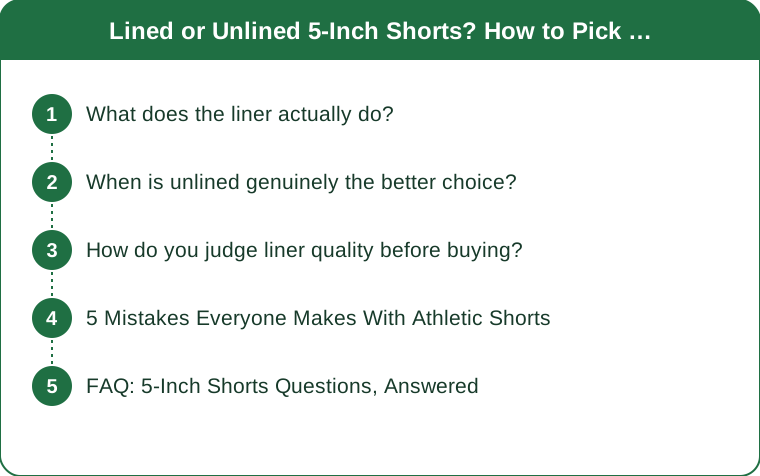
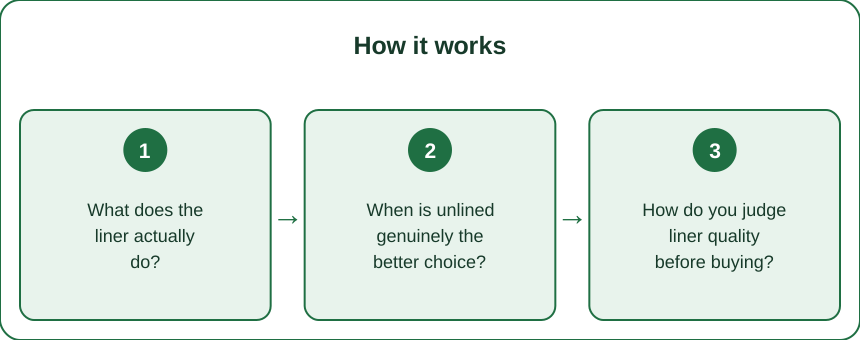
What does the liner actually do?
Three jobs, and they are worth separating.
It anchors the shorts. A liner grips your upper thigh, and the outer shell is attached to it. That connection is what stops the shell from riding up between the legs during a run, because the liner absorbs the movement instead of the shell climbing.
It reduces chafe. A smooth liner sits between skin and the outer fabric’s seams. In high-mileage running, the shell’s inseam is the usual chafe source, and a liner removes that contact entirely.
It replaces underwear. Athletic liners are cut without the seams and gathers that regular underwear has, which is exactly what makes cotton underwear a bad choice under shorts — it holds moisture and its seams sit where friction happens.
What a liner does not do: provide meaningful support. That is the bra’s job, and a liner brief is not designed to shape or hold anything.
The cost is heat. Two layers over the same area is warmer than one, which is very noticeable in an 85-degree August afternoon and irrelevant in an air-conditioned gym.
When is unlined genuinely the better choice?
Lifting. There is minimal leg separation, the shorts are not riding anywhere, and you want the coolest, least restrictive option. An unlined 5-inch short with a good inseam sits still through squats and deadlifts.
Layering over leggings or bike shorts. This is the most common reason to go unlined. Two liners is one too many, and a lined short over a legging is bunchy and hot.
Cycling. If you are wearing padded shorts underneath, the liner is in direct conflict with them.
Hot yoga and heat generally. Fewer layers, faster drying.
When you have a base layer you actually like. Liner cut is not adjustable. If you have found seamless briefs that work for your body, an unlined short lets you keep them.
Sizing flexibility. Liners are often the tightest part of a lined short, so if you are between sizes, an unlined pair sizes more predictably.
One more practical point: unlined shorts dry faster and wash easier, which matters if you are training daily and doing laundry weekly.
How do you judge liner quality before buying?
Check the leg opening of the liner. A flat, bonded, or raw-edge finish stays put. A gathered elastic band is the version that digs in and leaves a mark, and it is the most common complaint.
Check the liner length relative to the shell. The liner should sit slightly shorter than the shell, not the same length. Equal length means the liner hem shows at the bottom every time you move.
Check the attachment. A liner attached only at the waistband moves freely and can twist. One with a tack at the sides stays oriented.
Check the fabric. The liner should be a smooth, fast-drying knit. A mesh liner is cooler but can be scratchy; a soft jersey liner is more comfortable and slower to dry.
Try the movement test. In the fitting room, do a few high knees and a lunge. If the shell rides and the liner stays, the attachment is weak. If both stay, it is working.
And on the 5-inch length specifically: it is the point where lined and unlined behave most differently, because it is long enough for the shell to catch on the thigh but short enough that ride-up is immediately visible. At 7 inches the difference matters less; at 3 inches almost everyone wants a liner.
5 Mistakes Everyone Makes With Athletic Shorts
1. Wearing cotton underwear under lined shorts. Three layers, one of which holds sweat against skin. If the short has a liner, that is the base layer.
2. Sizing the short by the shell. The liner is the tighter component. If the shell fits and the liner pinches, the pair does not fit.
3. Assuming lined means no chafe. A liner with a gathered elastic leg opening can create chafe of its own, right at the hem. Check the finish before assuming it solves the problem.
4. Buying unlined and skipping a base layer. Unlined shorts against bare skin in a high-friction activity is the exact scenario liners exist to prevent.
5. Judging by the store, not the sweat. Both versions feel fine dry. The difference appears at minute twenty when the fabric is damp — which is why the return window matters more than the fitting room.
FAQ: 5-Inch Shorts Questions, Answered
Can I remove the liner from a lined pair?
Sometimes, if it is attached only at the waistband seam — but the shell will then ride up, since you removed the thing anchoring it. Usually better to buy the unlined version.
Why does the 5-inch length ride up more than 7-inch?
Because the hem sits nearer the widest part of the thigh, where circumference changes fastest. Shorter shorts sit above that zone and longer ones sit below it. Five inches is right at the edge for many people.
Is a liner hygienic if I wear the shorts twice?
The liner sits against skin, so treat it as underwear — one wear per wash. That is a real argument for unlined if you want to re-wear a shell.
Do lined shorts work for swimming or water workouts?
Some do, but most athletic liners are not chlorine-resistant and the elastane degrades quickly. Buy a purpose-made water short instead.
TL;DR:
- The liner’s real job is anchoring the shell and preventing chafe, not support.
- Lined for running, HIIT, and anything with repeated leg separation.
- Unlined for lifting, layering over leggings, cycling with pad shorts, hot yoga, and heat.
- Check the liner’s leg-opening finish and attachment points — that is where quality shows.
- The liner is the base layer; do not add another one under it.
Five inches is the length where this choice actually changes your experience. Pick based on whether your legs separate repeatedly, and the rest follows.
See It in Motion
Seen here: Super High Waist Embossed Yoga Leggings with Inner Pocket — shop it on bubblelime.com
Keep Reading
This article is for general informational and styling purposes only. Fit, sizing, and product availability may vary.