5-Inch vs 7-Inch vs 3-Inch Shorts: What Inseam Actually Changes
Quick Answer: Inseam determines exactly one thing - where the hem lands on your thigh - and that one thing drives everything else: a 3-inch ends above where most thighs touch (full stride freedom, zero fabric between skin), a 5-inch lands near the contact zone (the versatile default, with or without a liner), and a 7-inch covers it entirely (bike-short territory - chafe insurance and coverage, at the cost of some stride and airflow). The right number is a map of your own thigh contact line, not a trend: find where your legs touch, then pick the hem that either clears it completely or covers it completely. Hems that end exactly on the line are the ones that ride, rub, and annoy.
The same brand, the same fabric, the same size - and the 3-inch feels like freedom while the 7-inch feels like armor, and the 5-inch feels like Tuesday. Two inches is apparently a personality. Here is what each number is actually doing, so the next pair is chosen instead of guessed.

What does the inseam number physically control?
One coordinate with cascading consequences.
Inseam is hem altitude. Measured from the crotch seam down the inner leg, it fixes where the hem crosses your thigh - and the thigh is not a uniform cylinder. The upper third is where most people’s legs touch each other when walking; the middle is the widest circumference on many bodies; toward the knee, legs narrow and separate. The same two-inch difference relocates the hem across completely different terrain.
The thigh contact line is the coordinate that matters. Most bodies - most, at every size and fitness level - have some zone where inner thighs brush in a normal stride. Fabric that ends above it leaves skin managing skin (fine for many, chafe-prone for some, especially in an August sweat). Fabric that covers it puts a smooth layer over the whole contact zone - the entire value proposition of longer inseams and bike shorts. Fabric that ends on it gets grabbed by the contact every single step, which is the mechanical explanation for ride-up.
Ride-up is a hem-location problem, not a fabric quality problem. When a hem sits where thighs meet, each stride pinches a little fabric and nudges it north until the short has effectively become its own shorter version. This is why the counterintuitive rule holds: a 3-inch inseam often rides up less than a 5-inch on the same body - its hem was never in the grab zone to begin with.
And two spec-sheet footnotes that explain a lot of confusion: rise changes effective length (a high-rise 5-inch reads shorter on the leg than a low-rise 5-inch, because the whole garment starts higher), and inseams are graded with size at some brands - meaning the 5-inch you tried in one size can genuinely be a 4.5 or 5.5 in another. The number on the tag is a starting estimate, not a promise.
What is each length actually best at?
Honest cases for all three, because each one wins somewhere.
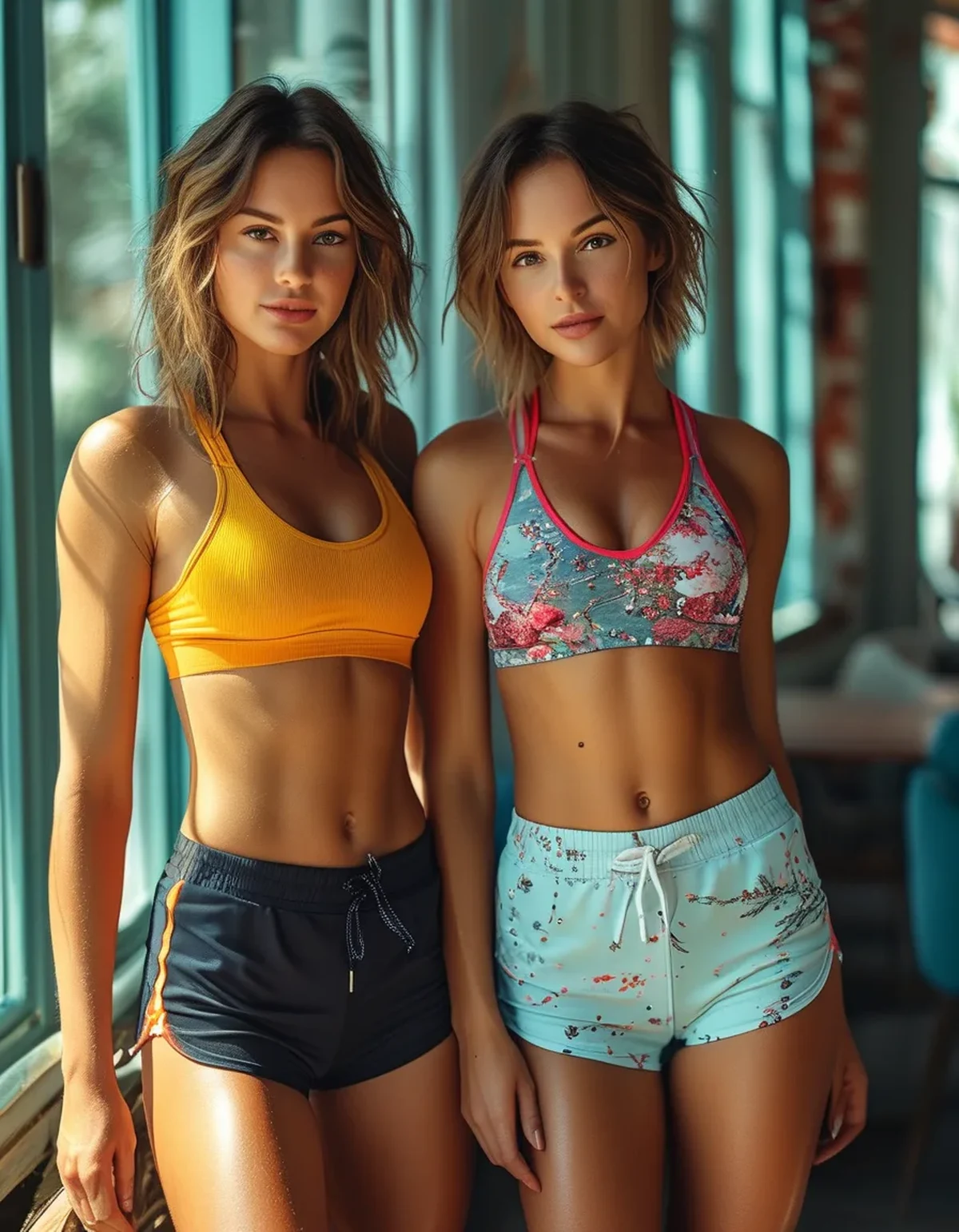
The 3-inch: maximum stride, minimum fabric. Nothing between the legs means nothing to bunch, grab, or ride - the paradox of the shortest inseam is that it is often the best-behaved. Best for: running, where stride freedom and airflow rule; HIIT and jump work; hot-day training; and anyone whose thighs barely brush. The trade: zero chafe protection for those who need it, more of the leg in every photo than some prefer, and the sit-down test matters - on a bench or a bike saddle, three inches is not much runway.
The 5-inch: the reason it became the default. The hem lands low enough for coverage that survives sitting, bending, and errands, high enough to keep real stride freedom - the one length that goes from a workout to a coffee without reading as either gym-only or long. Best for: mixed training days, walking, travel, and being the single pair in the bag. The honest caveat: on bodies whose contact line sits low, the 5-inch hem lands right in the grab zone - which is exactly the ride-up complaint the length is famous for. The liner version mitigates it; the compression-lined 5-inch nearly solves it.
The 7-inch: the coverage and anti-chafe specialist. Covering the contact zone entirely, usually in a fitted or compression cut, it is functionally a short bike short - the chafe solution, the modesty preference, the under-dress layer, the strength-day staple whose hem never moves during squats. Best for: lifting, long walks in heat, anyone whose thighs argue with each other, and everyone who simply likes the line of it. The trades: warmest of the three in August, some stride awareness at full sprint, and in loose (non-fitted) cuts the length can visually shorten legs - fitted 7-inches avoid that almost entirely.
The quiet fourth option worth naming: many wardrobes settle on two numbers, not one - a 3 or 5 for cardio and heat, a 7 for strength and chafe days. The same logic that fills a drawer with both shorts and yoga pants applies two inches at a time.
What Nobody Tells You About Inseam Numbers
Brands measure from different starting points. Some measure the liner, some the shell; some from the true crotch seam, some from the gusset edge. Two 5-inch labels can land half an inch apart on your leg - which your thigh notices even if the spec sheet says identical. Trust the mirror over the tag, and when ordering online, check the garment-measurement chart rather than the marketing number.
Rise is silently part of the length story. A high-rise waistband lifts the whole garment, pulling the hem up with it; a low-rise drops everything. If a friend’s 5-inch looks longer on her than yours does on you, compare rises before concluding anything about legs or sizes.
The liner rewrites the length’s behavior. An unlined 5-inch and a compression-lined 5-inch are different garments sharing a hem: the liner occupies the thigh-contact zone from inside, so the shell can float without being grabbed. If you love a length that misbehaves, try the lined version of the same number before changing numbers.
Sit-testing beats mirror-testing. Standing, every length looks like its catalog photo. The information arrives seated: hems climb about an inch and a half when you sit, whatever the number. The three-position fitting-room test - stand, deep squat, sit cross-legged - forecasts the whole ownership experience in ninety seconds.
Fabric weight changes perceived length. A drapey lightweight 5-inch reads shorter and moves shorter than a structured woven 5-inch, because drape follows the leg while structure stands off it. This is why the same inseam feels different across a brand’s own lines.
And your number can change with your training. Runners who add lifting discover the 7-inch; lifters who take up running discover the 3. The drawer is allowed to evolve - the contact line and the activities decide, and both are legitimately movable.
How do you find your number without buying five pairs?
Map the leg, then match the mission.
Step one: find your contact line. In fitted shorts or leggings, walk twenty normal steps and notice where - if anywhere - your inner thighs brush. Mark the zone mentally: high (upper third only), mid, low (contact continuing toward mid-thigh), or none. This five-second observation is the single most useful sizing datum you own, and no chart substitutes for it.
Step two: apply the clearance rule. Choose a hem that ends clearly above the zone (think 3-inch territory for high-contact-only bodies, where the hem clears easily) or clearly below it (7-inch territory, full coverage) - or a lined short where the liner handles the zone and the shell length becomes pure preference. The only wrong answer is a hem that terminates inside the zone unlined: that is the ride-up purchase, at any price.
Step three: match the mission split. Count your actual weeks: mostly running and cardio in heat leans 3 or lined 5; mostly strength and walking leans lined 5 or 7; genuinely mixed weeks justify owning two numbers and ending the compromise entirely.
Step four: run the ninety-second test on whatever you try. Stand (does the hem sit level and calm), deep squat (does it climb and stay climbed, or resettle), sit cross-legged (is the coverage still where you want it). A short that passes all three positions in the store passes them all season.
A late-summer buying note: August is when retailers clear short inseams to make rack space, which makes right now the cheap month to run the experiment - and the weather is still hot enough to field-test immediately. Whatever number wins, it will also quietly inform the rest of the drawer: the contact-line logic is exactly why bike shorts, capris, and full-length yoga pants each have their loyalists. The leg was the chart all along.
FAQ: Shorts Inseam Questions, Answered
What is the difference between 3-inch, 5-inch, and 7-inch shorts?
Hem location on the thigh, which drives everything: a 3-inch ends above most bodies’ thigh-contact zone (maximum stride and airflow, zero chafe fabric), a 5-inch lands near it (the versatile default - best lined if your thighs touch), and a 7-inch covers it entirely (chafe protection and coverage, in bike-short territory). Each length wins for different bodies and activities.
Why do my 5-inch shorts ride up when I walk?
Because the hem terminates right where your inner thighs brush, and each stride pinches fabric upward - a hem-location issue, not a quality issue. Fixes in order: the same length with a compression liner, a shorter inseam that clears the contact zone, or a longer one that covers it. Counterintuitively, shorter often rides less.
What inseam is best for running versus lifting?
Running favors 3-inch or lined 5-inch - stride freedom and airflow dominate, and split or notched hems add range. Lifting favors 5-to-7-inch fitted styles whose hems stay put through squats and lunges without adjustment. Mixed training weeks are the argument for owning two numbers instead of compromising with one.
Are inseam measurements consistent across brands?
No - measurement start points differ, some brands grade inseam with size, and rise height shifts where any inseam actually lands on your leg. Treat the number as an estimate, check garment-measurement charts online, and trust the stand-squat-sit test over the tag every time.
TL;DR:
- Inseam sets hem altitude on the thigh; your thigh-contact line decides what that altitude means.
- Hems that end inside the contact zone ride up - clear it (3-inch), cover it (7-inch), or line it (lined 5).
- The 5-inch defaults for a reason; the 3 wins stride and heat; the 7 wins chafe and squats.
- Tags lie a little: measurement points, size grading, and rise all move the real hem. Stand, squat, sit before trusting.
- Two numbers in the drawer beats one compromise - and August clearance is the cheap time to find yours.
The number on the tag was never the point. The line on your leg is - find it once, and every future pair is chosen in advance.
See It in Motion
Seen here: High Waist 8” Yoga Shorts — shop similar styles on bubblelime.com
Keep Reading
This article is for general informational and styling purposes only. Fit, sizing, and product availability may vary.